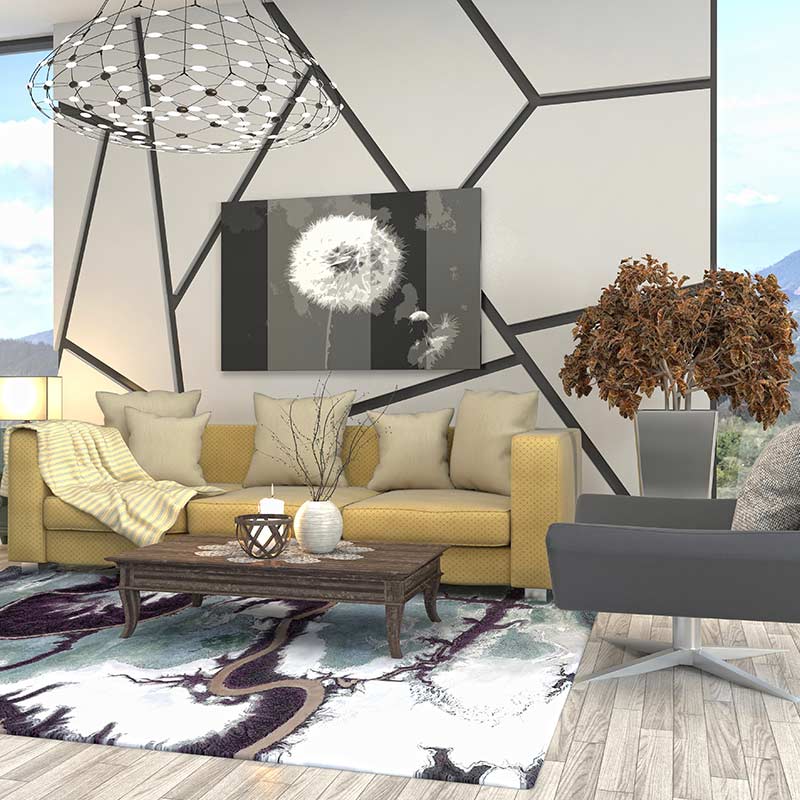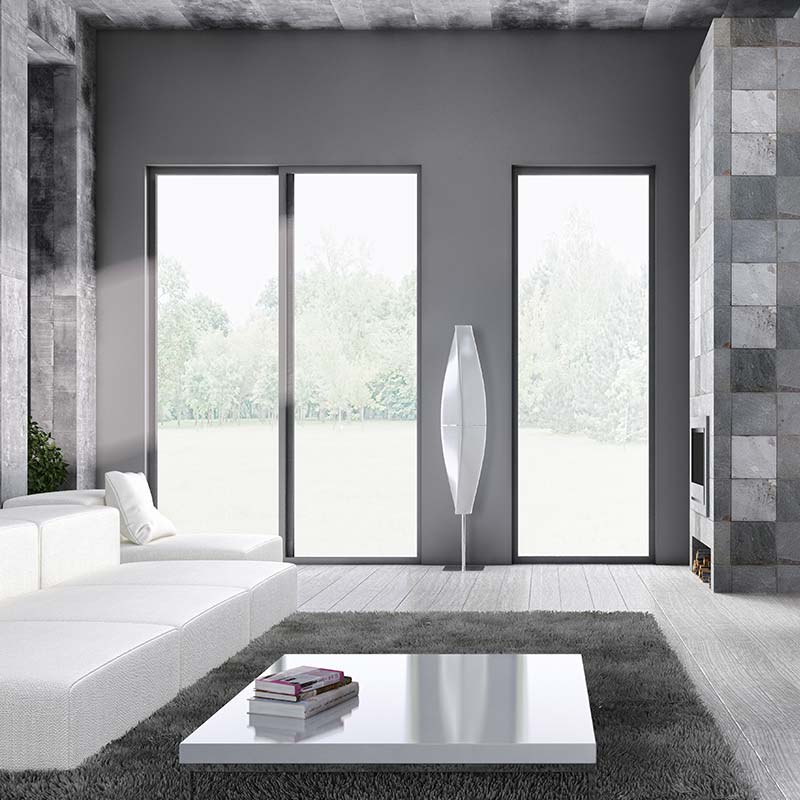
When we talk about the ‘ideal home’, we often focus on the layout design and soft furnishings style, but easily overlook the most fundamental and important part of the building – the walls. As the core carrier for separating spaces and safeguarding safety, the selection of wall materials is no longer just about “shelter from wind and rain”. Today, with the awakening of health awareness and the upgrading of green consumption, environmentally friendly wall materials are becoming the preferred choice for more and more families and developers due to their “low consumption, health, and comfort” characteristics, quietly changing our way of living. Today, starting from the pain points of daily living, we will talk about how environmentally friendly wall materials can “add points” to life, and how [company name] uses ingenious products to make green living within reach.
1、 Your walls may hide these ‘invisible problems’
After moving into a new house, many people will encounter a series of troubles of “saying big or small”: in winter, they always feel cold near the wall, and the temperature of the air conditioner is difficult to stabilize even after being on for a long time; During the rainy season, the walls are prone to moisture and mold, and black spots may grow on the corners of the walls; There are elderly people and children at home who are always worried about excessive formaldehyde after decoration… The root of these problems often points to the limitations of traditional wall materials.
-Energy consumption pain point: The “non insulated” wall makes the wallet quietly shrink
The insulation performance of traditional clay bricks and ordinary cement walls is poor, just like putting a “thin coat” on a house – in winter, a large amount of heat is lost through the walls, and heaters and air conditioners have to operate at high loads; In summer, high outdoor temperatures easily infiltrate indoors, resulting in high cooling energy consumption. According to data from the China Building Energy Conservation Association, the additional energy consumption caused by insufficient wall insulation during the heating season in northern urban areas of China accounts for over 30% of the total household energy consumption. Taking a 100 square meter house as an example, it may cost an additional 200-300 yuan per month for heating in winter, which is a significant expense over the course of the year.
-Health Pain Point: The ‘Polluted’ Wall Makes Breathing Less Comfortable
In order to pursue strength and construction efficiency, some traditional wall materials add chemicals such as glue and preservatives during production, which slowly release harmful substances such as formaldehyde and TVOC (total volatile organic compounds) over a long period of time. Even more covertly, in humid environments, traditional walls are prone to mold growth, and mold spores can spread with the air, which may cause respiratory allergies, skin itching, and other problems, making them particularly unfriendly to sensitive populations such as the elderly and children.
-Maintaining pain points: “easily damaged” walls make living more troublesome
Traditional walls commonly suffer from the problems of being heavy, brittle, and prone to cracking: the walls are susceptible to temperature and humidity changes, making them prone to cracking; Encountering minor collisions may leave dents or damages; If the wall becomes damp again, it can also cause the wall paint to peel off and the wallpaper to curl up. Repairing it later not only costs money and effort, but also makes it difficult to restore its original appearance.
2、 Environmentally friendly wall materials: a ‘green solution’ to address residential pain points
Compared with traditional materials, environmentally friendly wall materials focus on “people-oriented” and “sustainable” in terms of raw material selection, production process, and user experience, accurately solving the above pain points and bringing comprehensive upgrades to living.
Energy saving: Wear a “constant temperature jacket” for your home
One of the core advantages of high-quality and environmentally friendly wall materials is their excellent thermal insulation performance. Taking the “Vacuum Insulated Environmental Protection Wall Panel” of [company name] as an example, its interior adopts a composite structure of vacuum insulation layer and inorganic insulation core material, with a thermal conductivity as low as 0.018W/(m · K), which is only 1/8 of traditional clay bricks. Houses decorated with this material can effectively lock in indoor heat in winter, with room temperature 3-5 ℃ higher than traditional wall houses, and heating equipment opening time reduced by 40%; Summer can block outdoor high temperatures, and the set temperature of air conditioning can be increased by 2-3 ℃, while still maintaining coolness. In the long run, not only can it save a lot of electricity bills, but it can also reduce energy consumption and contribute to the “dual carbon” goal.
Healthy and formaldehyde free: making the home a “safe breathing area”
The “health attribute” of environmentally friendly wall materials is reflected in the full process control from the source to the finished product. [Company Name] All wall products comply with the “formaldehyde free” standard, and natural inorganic materials (such as diatomaceous earth, volcanic ash), agricultural waste (such as bamboo fiber, straw) or industrial recycled materials (such as fly ash) are preferred as raw materials. Formaldehyde containing adhesives and additives are not used in the production process. Taking our “Diatomaceous Earth Environmental Protection Wall Panel” as an example, after testing by the National Building Materials Testing Center, the formaldehyde emission is less than 0.005mg/m ³ (far lower than the 0.124mg/m ³ specified in the national standard GB 18583-2008), and it also has the function of adsorbing formaldehyde and regulating humidity – when the indoor humidity is high, the wall panel can absorb moisture from the air; When the humidity is low, it can slowly release moisture and maintain the indoor humidity within a comfortable range of 40% -60%, reducing mold growth from the root and making breathing more reassuring.
Durable and damage resistant: Add a layer of “protective shield” to the wall
In response to the problem of traditional walls being prone to cracking and damage, [company name] has improved product durability through technological innovation. Our “fiber-reinforced composite wall panel” is made by adding alkali resistant glass fibers, plant fibers and other reinforcing materials to the raw materials, and then forming them under high temperature and high pressure. The product has a compressive strength of over 5.0 MPa and a flexural strength of 1.5 MPa, which is more than twice that of ordinary cement wall panels. In daily living, minor collisions are not easy to leave traces; The shrinkage and expansion rate of the wall caused by temperature and humidity changes is only 0.1%, significantly reducing the risk of cracking. In addition, the surface of the wall panel has been specially treated to have anti fouling and easy cleaning characteristics. If a child accidentally doodles on the wall, it can be easily wiped off with a damp cloth, making maintenance worry free and cost-effective in the later stage.
3、 [Company Name]: Beyond “Environmental Protection”, Understanding “Residential Needs” More
In the field of environmentally friendly wall materials, [company name] always believes that good products should not only be “green and environmentally friendly”, but also “meet the needs”. To this end, we have created a product matrix and service system that covers different scenarios and meets diverse needs from the perspective of users.
Product: Customized according to needs, suitable for various scenarios
Whether it’s new house renovation, old house renovation, or commercial space renovation, we can provide targeted solutions:
-Home Decoration: We mainly promote “diatomaceous earth environmentally friendly wall panels” and “bamboo fiber integrated wall panels”, which have health, insulation, and decorative functions. The wall panel surface can be customized with various textures such as wood grain, stone grain, and solid color, without the need for additional painting or wallpaper, and can be installed and lived in immediately, shortening the decoration period;
-Renovation of old houses: Introducing “lightweight insulation wall panels” with a thickness of only 3-5cm, which do not require dismantling the original walls and can be directly pasted and installed without occupying indoor space, solving the problems of poor insulation and aging walls in old houses;
-* * Commercial Space * *: For schools, hospitals, hotels and other places, provide “fireproof and antibacterial wall panels” with a fire rating of A1 and an antibacterial rate of over 99% (against common bacteria such as Escherichia coli and Staphylococcus aureus), meeting the safety and hygiene needs of public spaces.
Service: Full cycle escort, making decoration more worry free
We are well aware that the “good effect” of wall materials cannot be achieved without professional installation and service. To this end, [company name] has established a full cycle service system of “design installation after-sales”:
-Pre design: Provide free on-site measurement services, provide personalized wall decoration plans based on housing layout and user needs, and avoid installation hazards in advance;
-On site installation: Establish a professional installation team, all workers have undergone strict training and assessment, and adopt dry construction technology. The site is free of dust, noise, and construction waste, and can be cleaned and moved in after installation is completed;
-After sales guarantee: All products come with a 5-year warranty service. If there are quality problems such as cracking or detachment during the warranty period, free repair and replacement will be provided; Simultaneously open a 24-hour customer service hotline to promptly respond to user inquiries and needs.
4、 Choosing environmentally friendly walls: not just “choosing materials”, but also “choosing life”
Nowadays, choosing environmentally friendly wall materials has gone beyond the scope of “following the trend and being green”, becoming a pursuit of healthy living and a responsibility for a sustainable future. When we replace traditional materials with environmentally friendly wall panels, we can not only create a more comfortable and reassuring living environment for our families, but also contribute to reducing resource consumption and carbon emissions. For every 100 square meters of environmentally friendly wall panels used, it is equivalent to reducing 2.3 tons of carbon dioxide emissions and saving 1.5 tons of standard coal.
In the future, [company name] will continue to cultivate technological innovation and launch environmentally friendly wall products that are healthier, smarter, and more in line with needs, making “green living” no longer a choice for a few people, but a daily life that everyone can have.