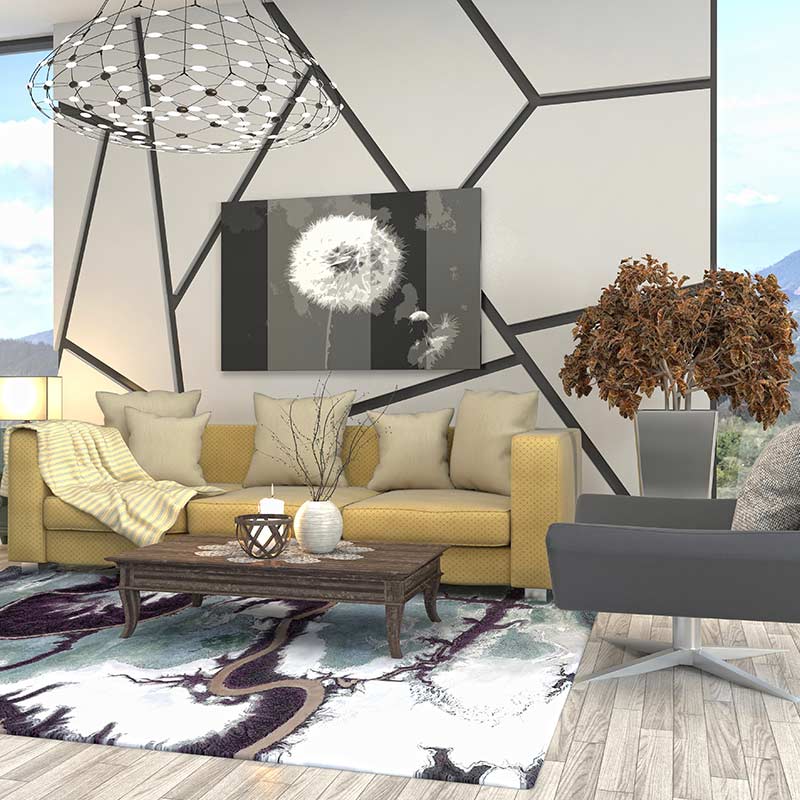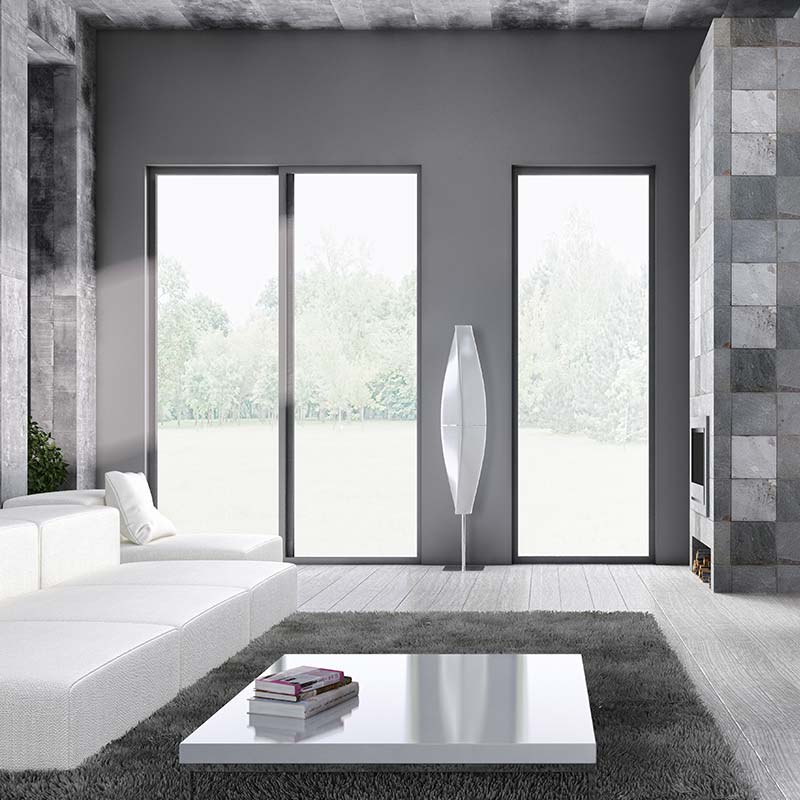
In today’s accelerated urbanization process, architecture is no longer just a cold pile of steel and cement, but carries humanity’s yearning for “harmonious coexistence with nature”. The material selection of walls, as the “first barrier” between buildings and the outside world, not only determines the performance and lifespan of the building, but also affects the balance of the ecological environment. In the past, traditional wall materials relied on resource plundering production, forming a “confrontation” with nature; Nowadays, environmentally friendly wall materials are using a “symbiotic” mindset to reconstruct the relationship between architecture and nature. Today, we will interpret the deep value of environmentally friendly wall materials from the perspective of “ecological symbiosis”, and how [company name] uses technology and responsibility to make every wall an “extension of nature”.
1、 From “confrontation” to “symbiosis”: the ecological logic of environmentally friendly wall materials
The production and use of traditional wall materials are essentially a “one-way exploitation” of nature: mining clay damages farmland, burning cement consumes fossil energy, and after being discarded, it becomes difficult to degrade construction waste – according to statistics, wall materials account for over 60% of the construction waste generated in China every year, most of which are directly buried without treatment, occupying land and polluting the environment.
The core logic of environmentally friendly wall materials is “respecting nature and recycling”, achieving symbiosis with ecology through three major paths:
-Raw material symbiosis: turning “waste” into “resources”
High quality and environmentally friendly wall materials do not rely on non renewable resources, but are made from natural gifts or industrial and agricultural waste as raw materials. For example, the “straw slag composite wall panel” of [company name] uses a large amount of straw generated in agricultural production (with an annual straw production of over 800 million tons in China, some of which are burned and pollute the environment) and industrial emissions of slag as the main raw materials. Through scientific proportioning and process treatment, the original “environmental burden” is transformed into high-performance wall materials. For every 10000 square meters of wall panels produced, 200 tons of straw and 300 tons of slag can be digested, reducing carbon emissions from straw burning by about 150 tons and realizing the ecological value of “turning waste into treasure”.
-Energy consumption symbiosis: reducing the demand for natural energy in buildings
The thermal insulation performance of environmentally friendly wall materials is essentially to reduce the building’s “consumption demand” for natural energy. Taking the “Aerated Concrete Self Insulated Block” of [company name] as an example, the small pores evenly distributed inside form a natural “insulation barrier”, with a thermal conductivity of only 0.12W/(m · K). Buildings using this block do not require excessive reliance on coal-fired heating in winter and air conditioning for long periods of time in summer, reducing building energy consumption by about 30% annually. Converted into ecological value, a 120 square meter residential building can reduce carbon dioxide emissions by about 1.8 tons per year, equivalent to the carbon sequestration of planting 10 adult trees.
-Symbiosis of Life Cycle: Let the Wall “Return” to Natural Circulation
Traditional wall materials often become “non degradable waste” after building demolition; And environmentally friendly wall materials are designed with “recyclability” in mind from the beginning. The “biodegradable and environmentally friendly wall panel” developed by [company name] is composed of natural inorganic adhesives and plant fibers. After the demolition of the building, it can be crushed into powder, which can be used as a soil amendment or new building material after simple processing. It truly realizes the full life cycle of “coming from nature and going back to nature”, avoiding long-term pollution of the environment by construction waste.
2、 Not only ‘eco-friendly’: ‘multidimensional value upgrade’ of environmentally friendly wall materials
For users, the value of environmentally friendly wall materials goes far beyond “contributing to the earth”, and can bring tangible upgrades in living experience, building safety, economic costs, and other dimensions, achieving a win-win situation between “ecological benefits” and “user interests”.
Residential experience: making “home” closer to nature and comfortable
-Temperature and humidity self-regulation: The “Diatomaceous Earth Environmental Protection Wall Panel” of [company name] is rich in porous structure inside, which can absorb or release moisture from the air like a “sponge”, stabilizing indoor humidity within the comfortable range of 40% -60% for the human body. It does not regain moisture during the rainy season and does not dry during the dry season, reducing respiratory problems caused by humidity discomfort;
-Silent noise reduction: Environmentally friendly wall materials often use composite structures, and the internal pores and fibers can effectively absorb sound waves. Taking our “soundproof and environmentally friendly wall panel” as an example, the air sound insulation level reaches over 45dB, which is equivalent to reducing external noise to the level of a library in a noisy roadside residence, ensuring sleep quality and privacy of life;
-Natural texture: Unlike traditional walls that are cold and hard, environmentally friendly wall materials can present natural textures, such as the natural wood grain of bamboo fiber wall panels and the granular texture of volcanic ash wall panels. They can create a “close to nature” home atmosphere without additional decoration, reducing the pollution and oppression caused by artificial decorative materials.
Building safety: Add an “invisible protective shield” to the “home”
-Fireproof and flame retardant: Traditional wall materials such as wooden wall panels and ordinary gypsum boards have poor fire resistance; The environmentally friendly wall materials of [company name] mostly use inorganic raw materials, with a fire resistance rating of A1 (non combustible material), which does not burn or release toxic gases in case of fire, and can buy more time for escape in fire accidents;
-Disaster resistance and durability: for rainy and typhoon prone areas, our “weather resistant environmental protection wallboard” has undergone special anti-aging treatment, which can resist rain soaking and ultraviolet radiation, and will not fade or powdery after long-term use; At the same time, the wall panels have a lightweight texture but high strength, which can reduce the load pressure on the building during earthquakes and improve the overall safety of the building;
-No safety hazards: zero formaldehyde and zero heavy metal addition throughout the process. After testing by authoritative institutions, the TVOC release is less than 0.2mg/(m ³ · h), far below the national standard. Families with elderly, pregnant, and children can also use it with confidence, eliminating “hidden health risks” from the source.
Economic cost: making “green” not a “burden”
Many people believe that “environmentally friendly materials=high prices”, but in fact, the “long-term economy” of environmentally friendly wall materials far exceeds that of traditional materials:
-Short term cost: time-saving and labor-saving construction
Environmentally friendly wall materials often adopt modular design, such as [company name]’s “integrated environmentally friendly wall panel”, which can be directly assembled and installed without the need for multiple processes such as plastering and painting like traditional walls. The construction efficiency is increased by more than three times. For a 100 square meter house, wall construction only takes 3-5 days, greatly reducing labor costs;
-Long term cost: energy-saving+low maintenance
As mentioned earlier, the insulation performance of environmentally friendly walls can reduce energy consumption costs by 30% -50%. Calculated based on a 70 year building life, electricity bills alone can save hundreds of thousands of yuan; At the same time, its crack resistance, stain resistance, and mold prevention characteristics reduce the frequency of wall repair and renovation, and the maintenance cost in the later stage is only 1/5 of traditional walls.
3、 Hongxinshuo’s’ Symbiotic Practice ‘: Using Responsibility and Technology to Be a Natural’ Partner ‘
In the field of environmentally friendly wall materials, Hongxinshuo is not only a “product producer”, but also a “practitioner of ecological symbiosis concept”. We focus on “coexisting with nature” at every step from research and development, production to application, making environmental protection not just a slogan, but a practical action.
Research and development: Taking “nature as a teacher” and breaking through technological bottlenecks
Our R&D team always adheres to the principle of “learning from nature” and seeks inspiration from the characteristics of natural materials
-Drawing on the porous structure of diatomaceous earth, we have developed an “efficient moisture absorption and temperature regulation technology” to enable wall panels to have a “breathing function”;
-Imitate the toughness of plant fibers and develop a “fiber-reinforced composite process” to solve the pain points of “low strength and easy cracking” in environmentally friendly wall panels;
-The joint university has established the “Architecture and Ecology Symbiosis Laboratory”, investing 8% of its annual revenue in research and development. Currently, it has obtained 15 national patents, among which the “Recyclable Wall Material Technology” fills the industry gap and truly achieves “zero waste throughout the life cycle” of wall materials.
Production: Build a “zero carbon factory” to reduce ecological footprint
Our production bases established in Jiangsu and Guangdong are designed with the goal of “zero carbon”:
-Low carbonization of energy: 25000 square meters of photovoltaic panels are laid on the roofs of factories and open spaces in the factory area, with an annual power generation of over 3 million kWh, meeting 45% of production electricity needs; Prioritize the procurement of clean energy such as wind power and hydropower for surplus electricity, reducing carbon emissions by approximately 2800 tons annually;
-Production Cleanliness: Introducing fully enclosed automated production lines, with a dust recovery rate of 99.8%, and 100% recycling of treated production wastewater, achieving “zero discharge of wastewater”; At the same time, the scraps generated during the production process can be re crushed and processed into raw materials, with a material utilization rate of 99%;
-Ecological transformation of the factory area: Planting trees, shrubs and other plants in the factory area to create an ecological environment of “factory+garden”, not only beautifying the environment, but also adsorbing dust and purifying the air, achieving a harmonious coexistence of “production and ecology”.
Application: Promote “symbiotic projects” and enable green implementation
We actively participate in various green building projects and integrate the concept of “symbiosis” into practical applications
-Rural Revitalization Project: In the renovation of self built houses in rural areas such as Henan and Anhui provinces, the promotion of “straw composite environmentally friendly wall panels” and the use of local straw materials have been carried out, which not only reduces the decoration costs of villagers, but also solves the problem of straw burning pollution. Currently, more than 500 rural residences have been renovated;
-Green Community Project: Cooperating with several well-known domestic real estate companies, we have adopted a “full lifecycle environmentally friendly wall system” in high-end communities, with traceability from raw material production to post recycling, creating a model of “zero carbon community”. Currently, we have implemented 12 community projects, covering over 8000 households;
-Public welfare project: Participated in the “Post Disaster Reconstruction Green House Plan”, providing free environmentally friendly wall materials and technical support to areas affected by earthquakes and floods, helping disaster stricken people quickly rebuild safe and environmentally friendly homes, and has supported a total of 3 post disaster reconstruction projects.
4、 Choose eco-friendly walls: vote for yourself and for nature
When we choose environmentally friendly wall materials, we are essentially doing two “votes”: one for our own health and comfort, and the other for the ecological balance of the earth. Every environmentally friendly wall is a ‘small environmental action’, but when countless such walls are connected, they can form a ‘huge force’ to change the environment – reducing farmland damage, carbon emissions, and construction waste, making buildings no longer a ‘burden’ on nature, but a ‘partner’ that coexists with nature.
In the future, Hongxinshuo will continue to deeply cultivate the field of environmentally friendly wall materials, promote the deep symbiosis between architecture and nature with more advanced technology, higher quality products, and a more responsible attitude, and make every building a “part of green ecology”, so that everyone can enjoy a healthy and comfortable life in a harmonious environment with nature.